
Introduction
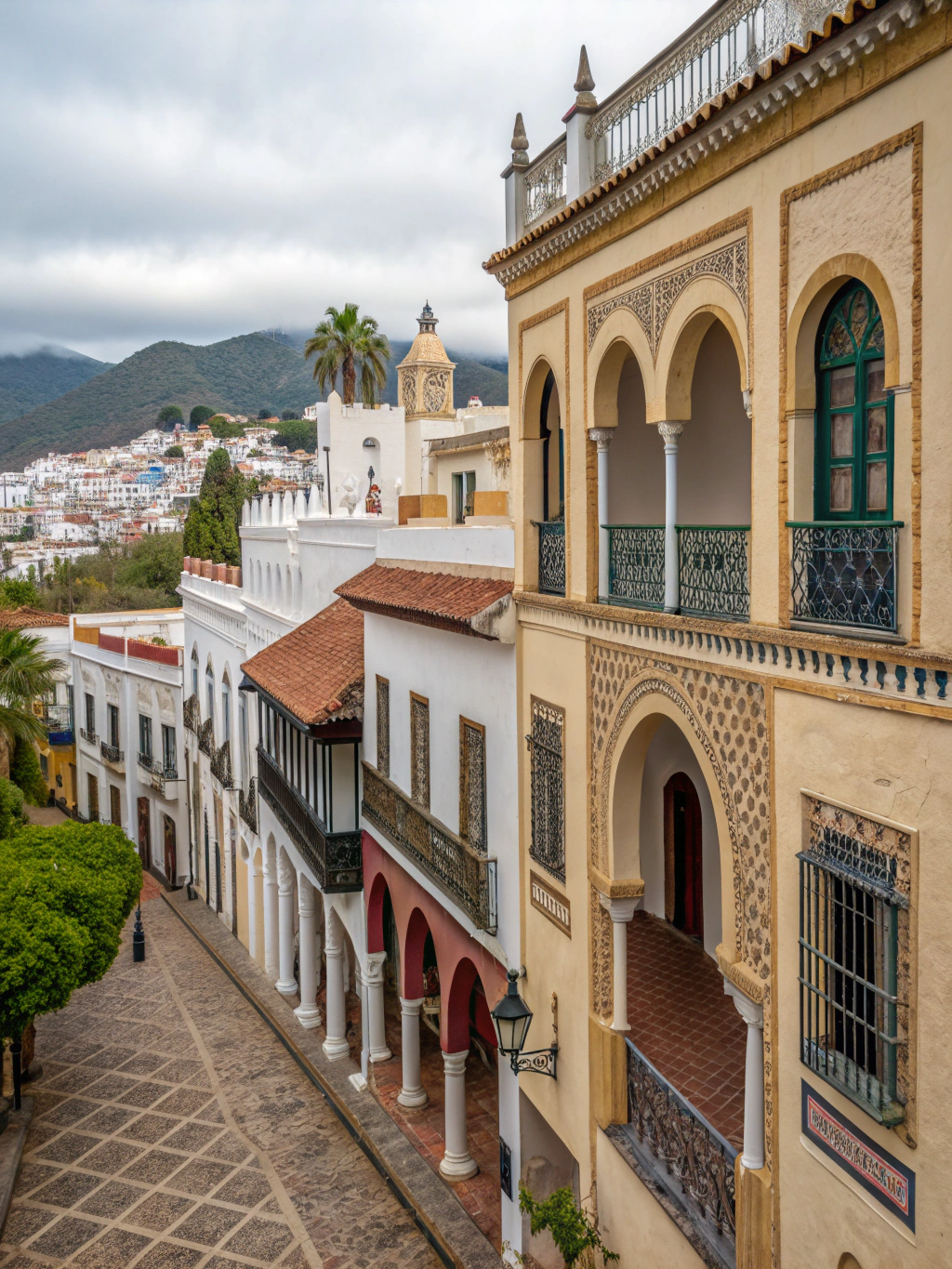
Did you know that nestled in northern Morocco lies a city with one of the most pristine collections of Spanish colonial architecture outside of Spain itself? While most travelers associate Morocco with intricate Islamic designs and bustling medinas, Tetouan reveals a fascinating architectural dialogue between cultures. The tetouan spanish colonial architecture stands as a testament to the unique historical relationship between Morocco and Spain. In the Ensanche quarter, elegant Art Deco facades, wide boulevards, and ornate balconies tell the story of the Spanish Protectorate period (1912-1956), creating a remarkable open-air museum that remains largely undiscovered by mass tourism.
Essentials & Must-Dos
Before embarking on your exploration of the tetouan spanish quarter, colonial architecture morocco, tetouan ensanche spanish, northern morocco spanish heritage, ensure you have these essentials:
- Comfortable walking shoes (the Ensanche district covers approximately 1.5 square kilometers)
- Wide-brimmed hat and sunscreen (Tetouan receives 320+ sunny days annually)
- Digital or printed architectural guide (consider downloading the Tetouan Heritage app instead of carrying bulky guidebooks)
- Camera with wide-angle lens for capturing façades
- Pocket Spanish-Arabic phrasebook (many older locals still speak Spanish)
- Light jacket for morning tours (temperatures can be 10°C cooler before noon)
- Reusable water bottle (public fountains are available throughout the quarter)
Timing & Scheduling
Planning your visit to Tetouan’s Spanish colonial district requires strategic timing:
- Best Season: Spring (April-May) or Fall (September-October) when temperatures average 22-25°C, ideal for walking tours
- Visa Preparation: Most visitors need 1-3 weeks for Moroccan visa processing
- Optimal Duration: Dedicate at least 2 full days to properly appreciate the Ensanche quarter
- Daily Schedule: Begin architectural tours before 10 AM when lighting is perfect for photography and temperatures are mild
- Cost Efficiency: Hotel rates in Tetouan are approximately 35% lower than Tangier and 50% lower than Marrakech
- Crowd Avoidance: Visit on weekdays; weekend tourist numbers increase by approximately 40% according to local tourism data
Step-by-Step Itinerary
Day 1: Eastern Ensanche & Main Boulevards
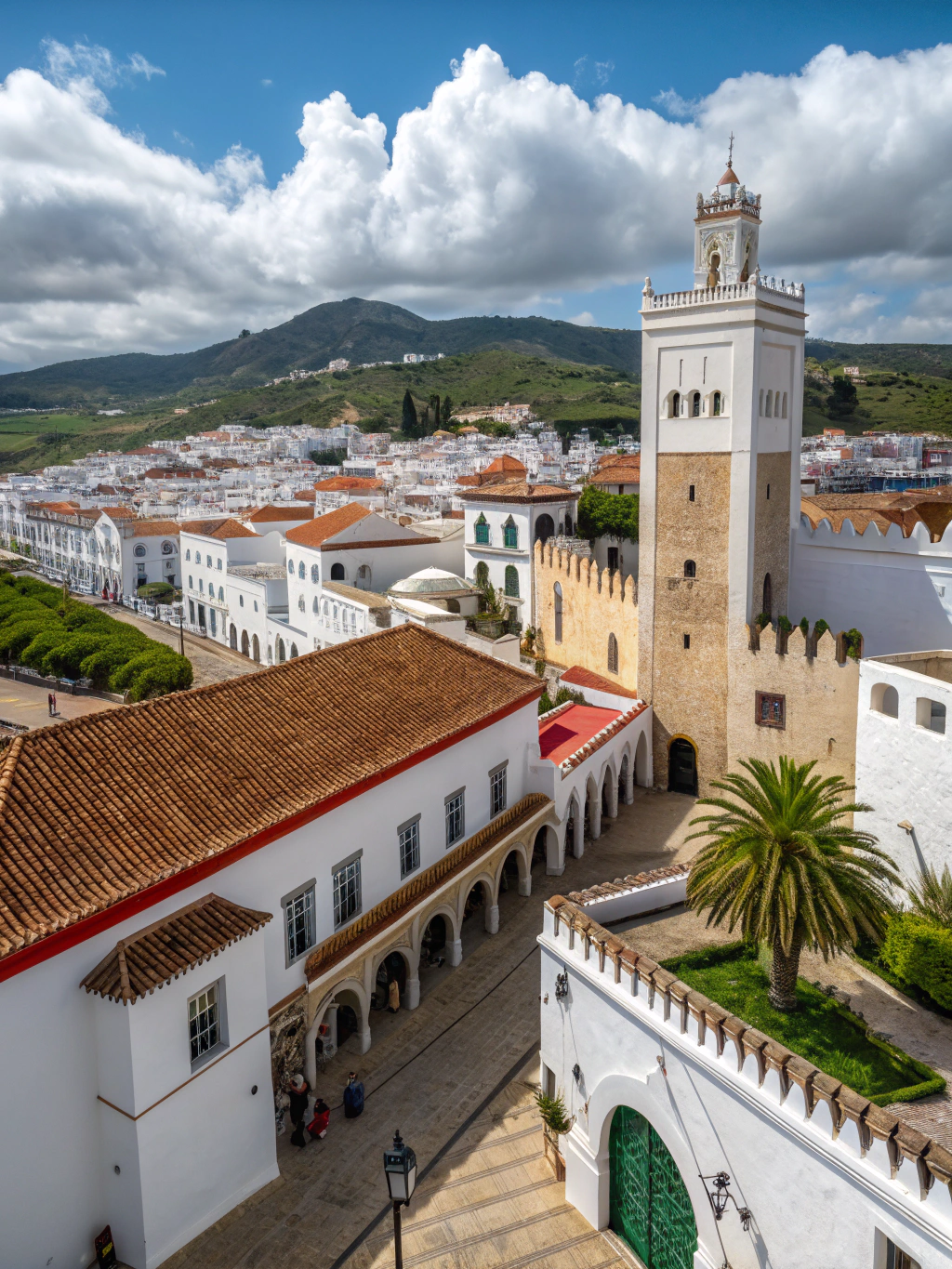
Start your morning at Plaza Primo, the heart of Spanish Tetouan. This square, designed in 1917, showcases the perfect synthesis of Andalusian and Moroccan design elements. Notice how the administrative buildings feature traditional Moroccan zellige tile work alongside Spanish-style arches.
Proceed down Avenida Mohamed V, once called Avenida Generalísimo, where the stunning Casino Español stands with its white façade and intricate ironwork. This 1928 social club exemplifies the Neo-Mudéjar style popular during the protectorate era.
Break for lunch at one of the traditional cafés along the boulevard, where time seems frozen in the 1930s with original Art Deco interiors and vintage photographs of colonial Tetouan.
In the afternoon, visit the Catholic Cathedral of Our Lady of Victory. Despite being a place of Christian worship, its design incorporates subtle Islamic decorative elements, demonstrating the architectural dialogue between cultures.
Day 2: Western Ensanche & Residential Districts
Begin your second day exploring the residential streets west of Avenida Mohamed V. These quieter thoroughfares contain some of the finest examples of Spanish-influenced domestic architecture, with ornate balconies and colorful ceramic decorations.
Visit the former Post Office building, a masterpiece of Spanish colonial architecture completed in 1927. Its blend of Art Deco and Neo-Moorish elements creates a uniquely “Tetouani” aesthetic that defines the city’s architectural identity.
After lunch, explore the Ensanche’s hidden gem: Calle Barcelona, where a row of perfectly preserved 1920s apartment buildings displays the evolution of Spanish colonial style, from early Modernist to late Art Deco influences.
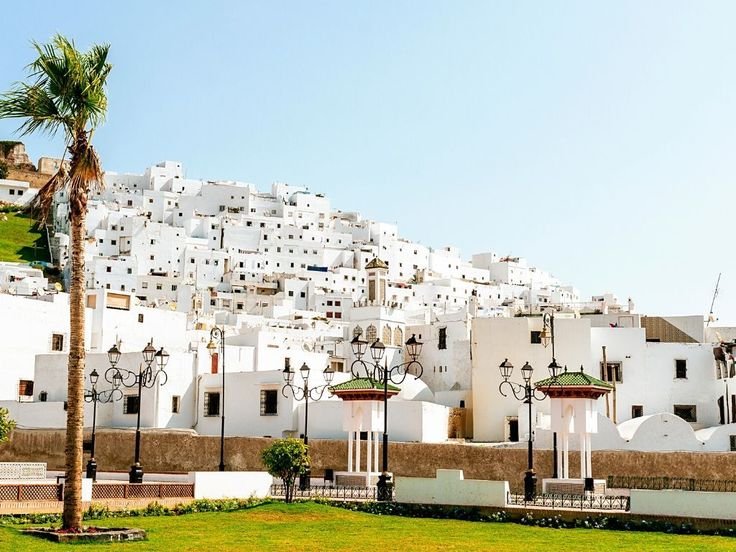
Conclude your tour at sunset at the Feddan Park, designed by Spanish landscape architects in 1943, offering panoramic views of both the Ensanche quarter and the UNESCO-listed medina, allowing you to compare and contrast these distinctive architectural worlds.
Health & Safety Advisories
According to the Moroccan Ministry of Tourism, Tetouan is among the safest cities in northern Morocco with crime rates 30% below the national average. Nevertheless, take these precautions:
- Drinking water: Stick to bottled water (approximately 5 dirhams)
- Sun protection: UV index regularly exceeds 9 between 11 AM-3 PM
- Medical facilities: Hospital Español provides services in Spanish and French
- COVID protocols: Check current requirements at travel.gov.ma
- Local emergency number: 190 (police) or 150 (ambulance)
- Photography etiquette: Always ask permission before photographing local residents
- Valuables: Use hotel safes for passports; the Ensanche quarter has 24-hour police patrols
Alternative Routes & Experiences
For Architecture Enthusiasts
Focus exclusively on the Art Deco buildings along Avenida Hassan II, where 15 significant structures from the 1930s showcase the height of Spanish colonial design innovation.
For History Buffs
Combine your Ensanche tour with visits to the Archaeology Museum and Ethnographic Museum, which contain artifacts and documents from the Protectorate period.
For Photography Lovers
Take the “Light and Shadow” route during early morning (7-9 AM) when the eastern facades catch dramatic lighting, or late afternoon (4-6 PM) when western buildings glow in golden hour.
For Budget Travelers
Stay in the medina (approximately 30% cheaper) and explore the Ensanche through a self-guided walking tour using the free Municipal Heritage Map available at the Tourism Office.
Suggested Activities & Pairings
Enhance your architectural exploration with these complementary experiences:
- Pair your Ensanche tour with a visit to the UNESCO-listed medina to compare Islamic and European urban planning
- Attend a Spanish-Moroccan fusion cooking class (approximately 350 dirhams)
- Visit the Royal Artisan School where traditional crafts taught during the Spanish period are still practiced
- Enjoy an evening flamenco performance at Centro Casa España, reflecting the enduring cultural influence
- Take a day trip to the blue city of Chefchaouen (90 minutes by car) to see how Spanish influence manifests differently in rural settings
Common Mistakes to Avoid
First-time visitors often make these errors when exploring Tetouan’s Spanish architecture:
Mistake: Rushing through the Ensanche in half a day
Solution: The district contains over 150 significant buildings; allocate at least two daysMistake: Missing interior architecture
Solution: Several buildings, including the Casino Español and Cinema Español, offer guided interior tours by appointmentMistake: Photographing only the obvious landmarks
Solution: Look up! The most exquisite details are often on upper floors and rooflinesMistake: Visiting during Ramadan
Solution: Many historical sites operate on reduced hours; check the seasonal scheduleMistake: Overlooking the contextual history
Solution: Visit the Protectorate Museum first for essential historical background
Logistics & Storing Tips
Make your exploration of Tetouan’s architectural heritage smooth with these practical tips:
- Store digital copies of architectural guides on your phone for easy access
- Pre-download Google Maps offline for the Ensanche area (approximately 22MB)
- Consider hiring a local architectural guide (350-500 dirhams for half-day tours)
- Most buildings are external viewing only; note the handful that offer interior access
- Carry small denomination currency for entrance fees (typically 10-30 dirhams)
- Save battery power by putting your phone in airplane mode when not needed
- Use cloud storage to back up photos daily; Tetouan’s architecture deserves thousands of images!
Conclusion
The tetouan spanish colonial architecture represents one of North Africa’s most remarkable yet underappreciated cultural treasures. The Ensanche quarter offers a living museum of early 20th-century Spanish-Moroccan design fusion that tells a complex story of colonialism, cultural exchange, and architectural innovation. As you walk these wide boulevards and admire the elegantly preserved facades, you’re experiencing a unique moment in Moroccan history when European and North African design sensibilities created something entirely new. Whether you’re an architecture enthusiast, history lover, or photography buff, Tetouan’s Spanish colonial district rewards those who take the time to look closely and appreciate its subtle harmonies and fascinating contradictions.
FAQs
How accessible is Tetouan’s Ensanche quarter for visitors with mobility issues?
The Spanish-designed Ensanche features wide, flat boulevards with proper sidewalks, making it significantly more accessible than the medina. Most major buildings have ground-floor access, though some historical sites lack elevators for upper floors.
Is photography restricted in any areas of the Spanish quarter?
Exterior photography is permitted throughout the Ensanche. For building interiors, particularly government buildings like the former Spanish High Commission, photography requires permission from security personnel.
How much Spanish influence remains in modern Tetouan beyond architecture?
Approximately 28% of Tetouanis speak Spanish as a second language—the highest percentage in Morocco. Spanish influence extends to cuisine, with numerous tapas restaurants, and cultural institutions like the Cervantes Institute that promote Spanish-Moroccan relations.
Are there any annual events celebrating Tetouan’s Spanish heritage?
Yes! The Spanish-Moroccan Cultural Festival held each May features architectural tours, historical exhibitions, and culinary events highlighting the shared heritage. The festival attracts approximately 5,000 visitors annually.
Has the Ensanche district been renovated or is it original?
About 75% of the buildings maintain their original facades from the 1912-1956 period. A UNESCO-backed restoration initiative began in 2018, carefully renovating key structures while preserving historical integrity.