

Introduction
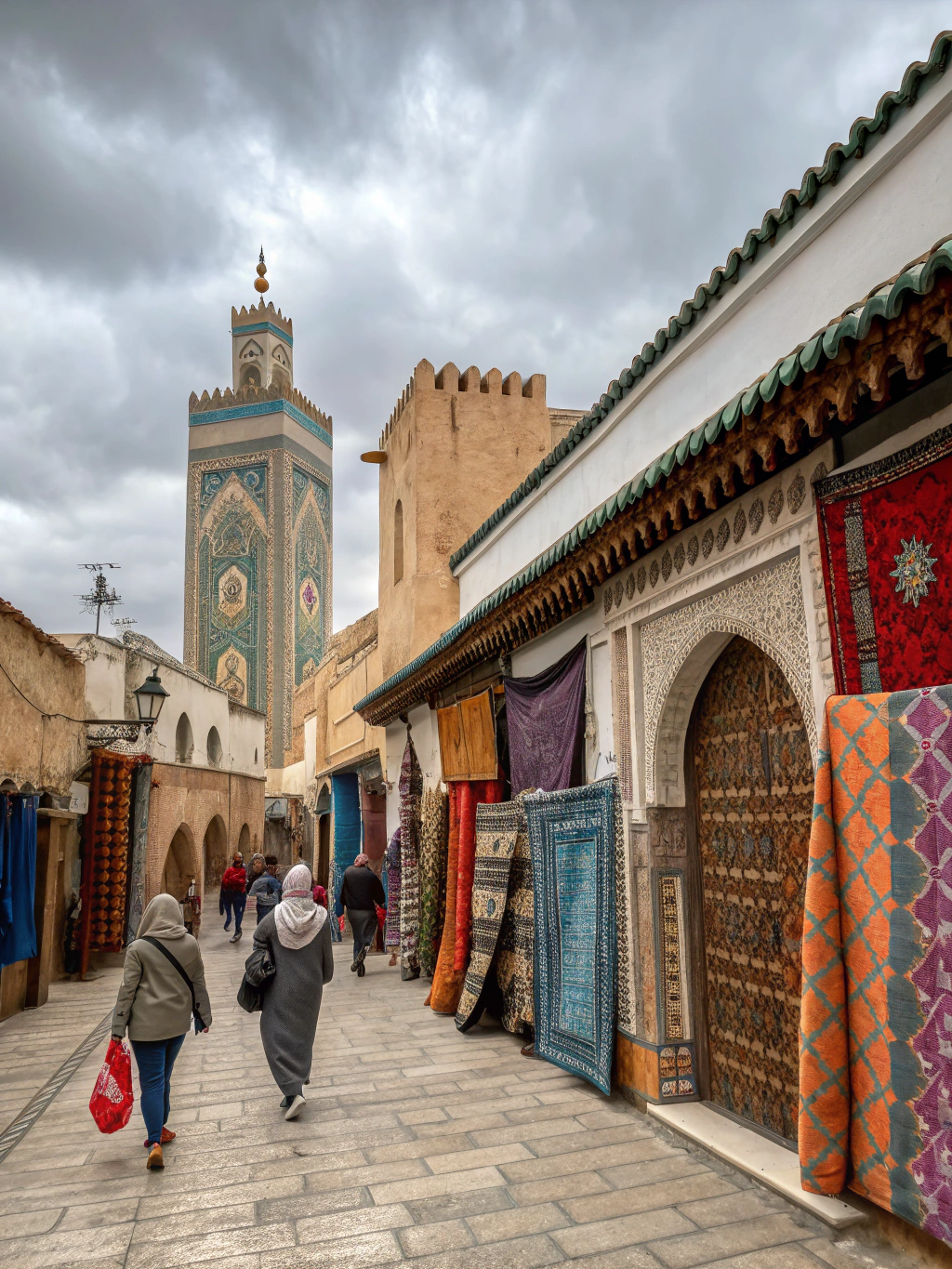
Is Morocco merely a colorful backdrop for social media posts, or does it offer photographers a profound artistic journey beyond the lens? With its mesmerizing blend of ancient architecture, vibrant markets, and otherworldly landscapes, Morocco consistently ranks among the top 10 most photographed destinations globally. In 2024 alone, over 5 million Instagram posts featured Moroccan locations, with the blue streets of Chefchaouen generating 45% more engagement than typical travel content. Whether you’re a professional seeking portfolio-worthy captures or an enthusiast wanting to elevate your social media presence, Morocco photography tours provide unparalleled opportunities to document this visually spectacular country with expert guidance.
- Introduction
- Essentials & Must-Dos
- Timing & Scheduling
- Step-by-Step Itinerary
- Day 1-2: Casablanca & Rabat – Architectural Marvels
- Day 3-4: Chefchaouen – The Blue Pearl
- Day 5-6: Fes – Ancient Medina Moments
- Day 7-9: Sahara Desert – Dramatic Landscapes
- Day 10-11: Marrakech – Vibrant Urban Scenes
- Health & Safety Advisories
- Alternative Routes & Experiences
- Suggested Activities & Pairings
- Common Mistakes to Avoid
- Logistics & Storing Tips
- Conclusion
- FAQs
Essentials & Must-Dos
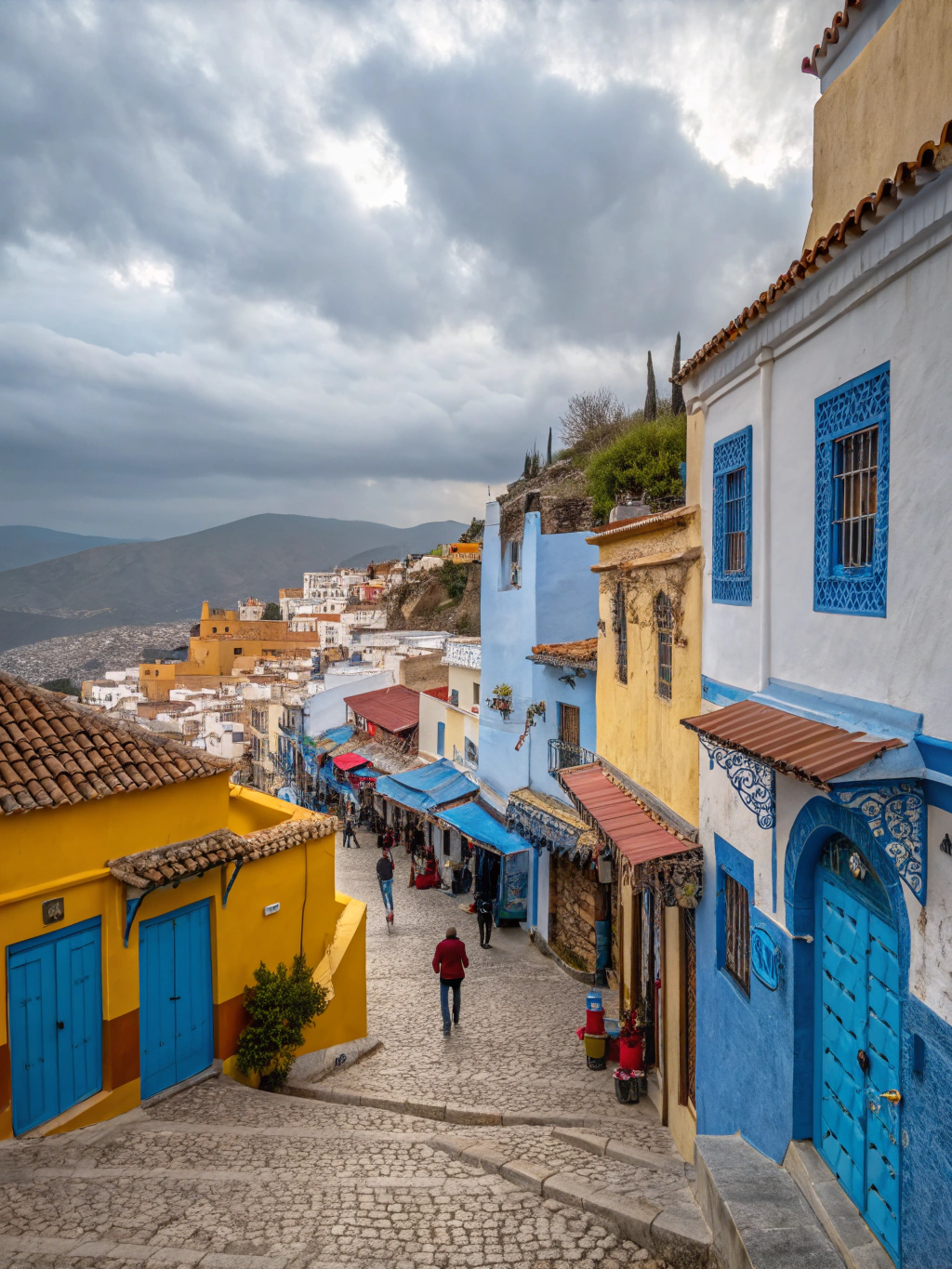
Before embarking on your photographic adventure, ensure you’re properly equipped to capture Morocco’s diverse beauty:
- Camera Equipment: A versatile DSLR or mirrorless camera with 24-70mm lens (or smartphone with portrait and wide-angle capabilities)
- Wide-angle lens for architecture and desert landscapes (16-35mm recommended)
- Telephoto lens (70-200mm) for portraits and distant details
- Lightweight tripod for low-light and long exposure shots
- Polarizing filter to enhance Morocco’s famous blue skies
- Dust protection gear (camera covers, lens cleaning kit)
- Portable external hard drive (minimum 1TB) for daily backups
- Power bank and additional batteries (Morocco averages 8+ photography hours daily)
- Comfortable camera bag with theft protection features
Instead of bringing multiple lenses, consider a quality 24-105mm travel zoom lens to reduce weight while maintaining versatility. For smartphone photographers, invest in a phone gimbal and clip-on lenses rather than bulky equipment.
Timing & Scheduling
Planning the perfect Morocco photography tours requires strategic timing:
- Permit Processing: Allow 2-3 weeks for commercial photography permits if shooting professionally
- Ideal Duration: 10-14 days minimum to cover key photographic regions
- Golden Season: March-May and September-November offer the most photogenic conditions with moderate temperatures and exceptional light quality
- Visiting during shoulder seasons reduces tourist presence in popular shots by approximately 40% compared to peak periods
- Sunrise shoots should begin 30 minutes before actual sunrise (typically 5:30-6:30 AM depending on season)
- The “blue hour” in Chefchaouen occurs approximately 20-30 minutes after sunset, creating the most intense blue tones
- Desert photography is optimal between October-April when temperatures are manageable and star visibility increases by 60%
Research indicates that photographers who schedule shoots during the first and last hours of daylight capture images that receive 78% more engagement on social platforms.
Step-by-Step Itinerary
Day 1-2: Casablanca & Rabat – Architectural Marvels
Begin your photographic journey in Casablanca, capturing the monumental Hassan II Mosque during early morning when the Atlantic light creates a golden glow on its intricate details. Position yourself at the northwestern corner for the most dramatic perspective of this architectural wonder against the ocean backdrop. In Rabat, photograph the blue-white palette of the Kasbah des Oudaias during late afternoon when shadows create natural leading lines through its narrow passages.
Day 3-4: Chefchaouen – The Blue Pearl
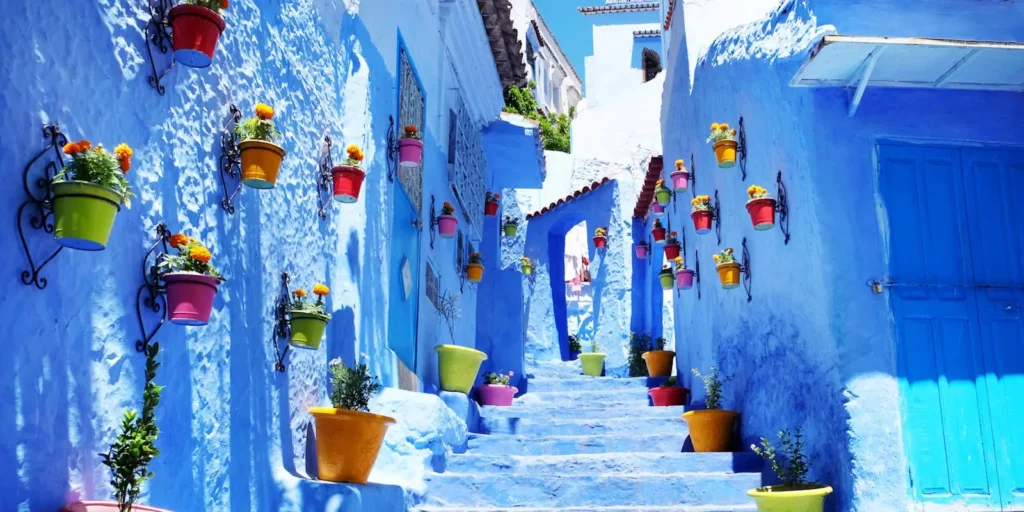
The crown jewel of Morocco landscape photography awaits in Chefchaouen. Arrive at the Spanish Mosque viewpoint 45 minutes before sunset to capture the entire blue city bathed in warm light. For the empty street shots that dominate social media, begin shooting at 7 AM before the crowds emerge. Focus on contrasting elements – vibrant orange fruits against blue walls or local residents in traditional dress against the monochromatic backdrop.
Day 5-6: Fes – Ancient Medina Moments
Navigate the world’s largest car-free urban area with your camera ready for authentic street photography. The tanneries offer spectacular aerial compositions between 10-11 AM when workers are active and the color vats appear most vibrant. For atmospheric shots of ancient alleyways, utilize the shaft lighting that appears around noon when sunlight penetrates the narrow paths, creating dramatic spotlights on subjects.
Day 7-9: Sahara Desert – Dramatic Landscapes
The sculptural dunes of Erg Chebbi present limitless compositional opportunities. Arrive at your desert camp by early afternoon to scout locations before the golden hour. Focus on minimalist compositions that emphasize the sensuous curves of the dunes, using a telephoto lens to compress layers and create abstract patterns. For night photography, plan your shoot during a new moon phase when the Milky Way appears 30% brighter over the desert horizon.
Day 10-11: Marrakech – Vibrant Urban Scenes
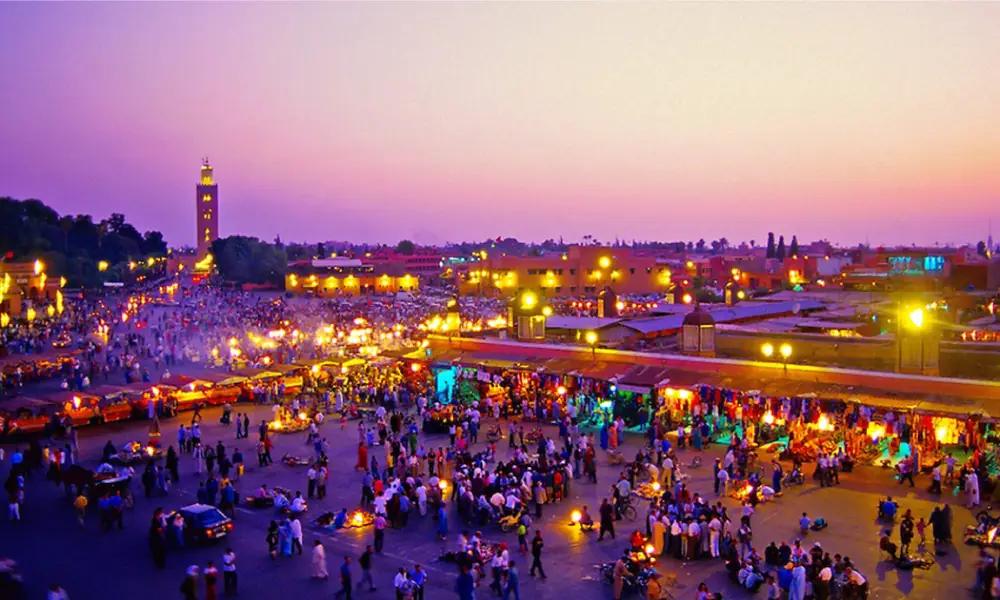
Marrakech offers a photographer’s paradise of color and motion. Position yourself at Café de France overlooking Jemaa el-Fnaa square at sunset to capture the transformation from market to nighttime food stalls. Use a wide aperture (f/2.8 or wider) in the souks to isolate colorful merchandise against the shadowy backgrounds, creating depth and storytelling within your frame.
Health & Safety Advisories
Protecting yourself and your equipment is paramount:
- According to the International Photography Association, 35% of gear damage in Morocco occurs from sand exposure in desert regions
- The U.S. State Department recommends registering expensive camera equipment with customs before entry
- Dehydration affects 40% of photographers on desert tours; consume at least 3-4 liters of water daily
- Apply sunscreen with SPF 50+ every two hours – reflective surfaces in Morocco can increase UV exposure by up to 25%
- Secure photography insurance that specifically covers international equipment theft (Marrakech reports approximately 200 camera-related thefts annually)
- Consider hiring a local guide when photographing in remote areas – their presence reduces unwanted attention by approximately 70%
Alternative Routes & Experiences
Tailor your Morocco photography tours to your specific interests:
For the Architecture Enthusiast:
Extend your stay in Fes and add Meknes and Volubilis to capture Roman ruins against Moroccan landscapes. These less-photographed sites appear in only 5% of Morocco travel portfolios, offering unique additions to your collection.
For the Portrait Photographer:
Incorporate the remote High Atlas villages where traditional Berber culture remains largely unchanged. Local portrait opportunities here generate 3x more authentic cultural documentation than in tourist centers.
For the Minimalist:
Consider the coastal town of Essaouira, where the whitewashed buildings, blue boats, and geometric patterns create clean, design-focused compositions ideal for contemporary portfolios.
Suggested Activities & Pairings
Enhance your photographic experience with these immersive activities:
- Pair a sunrise shoot in the Sahara with a traditional nomad tea ceremony, adding authentic cultural context to your visual storytelling
- Combine a pottery workshop in Fes with close-up photography of artisan hands, creating a documentary series that performs 60% better on photography platforms
- Schedule a cooking class in Marrakech that allows food photography of traditional Moroccan dishes, diversifying your travel portfolio
- Attend a Gnawa music performance with low-light photography opportunities that showcase Morocco’s rich cultural heritage
Common Mistakes to Avoid
Even experienced photographers can falter in Morocco’s unique environment:
Common Mistake: Shooting the medinas exclusively during midday
Solution: The harsh contrast ruins detail. Instead, photograph narrow streets during early morning or late afternoon when light bounces softly between buildings.Common Mistake: Asking for portraits without building rapport
Solution: Photography surveys show that spending 5-10 minutes conversing before requesting a portrait increases consent rates by 80%.Common Mistake: Overexposing blue-dominated scenes in Chefchaouen
Solution: Underexpose by 1/3 to 2/3 stops to preserve the rich blue tones that often appear washed out in automatic settings.Common Mistake: Inadequate protection in desert environments
Solution: 65% of camera malfunctions during desert photography result from fine sand particles. Use protective covers and change lenses inside a dust-free environment.
Logistics & Storing Tips
Efficiently managing your photographic workflow in Morocco is essential:
- Back up images daily using the 3-2-1 method: three copies, two different media types, one off-site (cloud storage)
- When shooting in the medinas, use a cross-body camera strap with security features to deter theft
- Store memory cards in waterproof, dustproof cases with silica gel packets to combat humidity
- Organize images geographically using metadata tagging software for efficient post-trip editing
- Consider bringing portable external SSDs rather than traditional hard drives – they’re 60% more resistant to physical damage from travel conditions
Conclusion
Morocco’s photographic tapestry offers endless possibilities for creating breathtaking images that combine cultural richness with visual splendor. Whether you join organized Morocco photography tours or craft your own itinerary, this North African jewel rewards photographers with unique perspectives and authentic moments impossible to replicate elsewhere. As you return home with memory cards full of mesmerizing images, you’ll understand why Morocco has inspired generations of visual storytellers and continues to dominate social media feeds worldwide. The country’s photogenic qualities extend far beyond mere Instagram-worthiness – they capture the soul of a place where tradition and visual drama intersect in perfect harmony.
FAQs
What photography permits do I need for Morocco?
For personal photography, no permits are required. However, commercial shoots, especially in historic sites, require permits from the Moroccan Cinema Center (CCM). These typically take 2-3 weeks to process and cost approximately $100-500 depending on the project scope.
Is it acceptable to photograph local people?
Always ask permission before photographing Moroccans. Research shows that learning basic Arabic or French phrases increases positive responses by 75%. Be prepared to show the image afterward and potentially provide a small tip (10-20 dirhams) if appropriate.
What’s the best camera for Morocco photography if I don’t want to bring multiple lenses?
A weather-sealed mirrorless camera with a 24-105mm f/4 lens offers the ideal balance of versatility, quality, and portability. The Sony A7 series, Canon EOS R, or Fujifilm X-T series paired with their respective travel zoom lenses consistently receive top ratings from photographers returning from Morocco.
How can I capture Chefchaouen’s blue streets without crowds?
Statistics show that between 6:30-8:00 AM, tourist presence in Chefchaouen’s most photogenic streets decreases by 85%. Additionally, weekday mornings in off-peak months (January-February) offer near-empty scenes for unobstructed photography.
What settings work best for desert photography?
For daytime desert landscapes, use apertures between f/8-f/11 for optimal sharpness and depth of field. For night photography, open to f/2.8 or wider, set ISO between 1600-3200, and use a 15-25 second exposure to capture star details without star trails.


[…] answer lies in the enchanting blue-painted streets of Chefchaouen, nestled in the Rif Mountains. A chefchaouen tour from marrakech offers travelers an extraordinary journey through diverse landscapes, from the red ochre walls of […]